accessories
Tackle Trays for Fishing Backpacks: Check the Actual Fit
A replacement tackle tray needs to fit both the backpack and the tackle. Buying the right nominal size is only the first step. Depth, latch clearance and internal divider layout determine whether the box slides into the bay and whether it solves your storage problem. Measure the actual tray you want to replace before ordering a complete new set.
As an Amazon Associate I earn from qualifying purchases. About affiliate links.
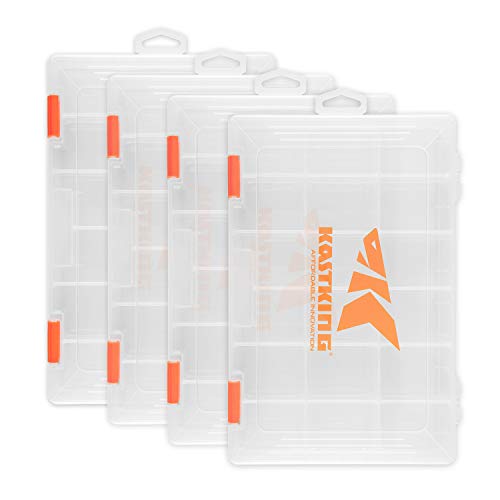 KastKing Utility Tackle Boxes, 3600 4 Pack Fishing Tackle Trays OrganizerCheck Amazon offer
  KastKing HyperSeal Waterproof Tackle Box, 3600 Tackle TraysCheck Amazon offer
 Record three outside measurements
Use external length, width and height, including the largest protruding latch or hinge. Plano’s current Classic 3600 page lists an example at 10.88 by 7.25 by 1.75 inches. Other 3600 designs can differ, so that figure should identify the specific example rather than become a universal rule for every medium tray.
Measure the backpack opening as well as the space behind it. A box can fit the compartment while catching on the zipper path. If the bag uses a shelf or divider, measure the complete loaded stack beneath it. Four trays that are each slightly deeper than the originals can prevent the compartment from closing normally.
Match depth to the lure, not unused space
Deep trays are useful for bulky lures and items that need room above their hooks. They are inefficient for small terminal tackle if much of the volume remains empty. A shallow tray can keep small pieces visible and reduce the total stack height, leaving space for another deliberately chosen box.
Lay out your longest lure, widest crankbait and largest hook before selecting divider positions. Check that hooks cannot bridge adjacent compartments when the lid shuts. For tiny swivels or clips, a specialized small box may be easier to manage than expecting one large adjustable tray to contain everything.
Choose a moisture strategy
Plano’s utility-box range includes both waterproof and Hydro-Flo designs. These represent different storage approaches: a sealed container aims to keep outside water away, while a ventilated design supports drainage or airflow. Match the tray to where it sits and how you handle wet tackle.
Neither approach excuses returning damp gear to long-term storage without attention. Water already inside a sealed box stays inside until you remove it. Separate freshly used lures from unused tackle during the trip, then dry them before reorganizing the main collection. Check seals and latch areas for trapped debris when using a gasketed tray.
Buy one test tray before a full conversion
A single trial box can reveal whether the latch catches on the bag, whether the handle uses too much clearance and whether the compartments suit your tackle. Load it as you normally would, insert it into the backpack and remove it several times. Do not force a zipper to make a near-fit appear successful.
Keep the arrangement consistent once you find a workable combination. Label the exposed edge rather than a surface hidden in the stack. A quick visual identifier helps when several boxes share the same shape. Store spare dividers together so changing lure types does not require buying another tray.
Preserve room for the rest of the trip
After settling on a tray stack, put water, clothing and personal items back into the backpack before ordering additional boxes. The maximum box count may occupy space those items need. Keep hooks contained and give each day box a repeatable position, so a tackle change ends with the box returned to its slot instead of left loose above the stack.
Questions about Tackle Trays for Fishing Backpacks: Check the Actual Fit
Is a 3600 label enough to guarantee fit?
No. Verify the specific tray’s external dimensions and the backpack’s opening, stack height and divider clearance.
Should all my trays be waterproof?
Choose protection according to exposure and storage habits. A sealed box is useful only when its closure is sound and the contents are managed dry.