guides
Tackle Tray Sizes: How to Check Backpack Compatibility
Match tackle trays to a fishing backpack using exact dimensions and the actual compartment opening. Names such as 3600 and 3700 identify familiar size families, but they do not eliminate differences in depth, latches and internal layout. A larger tray may carry longer lures while a smaller one is easier to fit into a compact pack. The right choice starts with your tackle and the bag you will carry, rather than buying a popular box family and hoping the rest of the system accommodates it.
As an Amazon Associate I earn from qualifying purchases. About affiliate links.
These offers show 3600 and 3700 utility-box packages. Measure the selected boxes and your compartment; the size-family number does not guarantee fit.
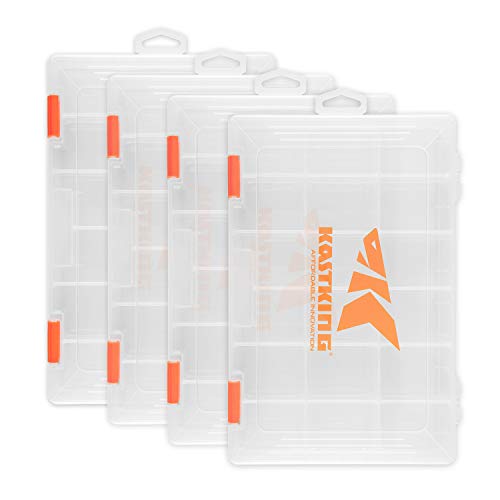 KastKing Utility Tackle Boxes, 3600 4 Pack Fishing Tackle Trays OrganizerCheck Amazon offer
  Plano ProLatch 3700 StowAway 4-Pack, Clear and Black, ProLatch Locking System, Transparent Design to Quickly Identify Contents, Fits 3700 Series Tackle BagsCheck Amazon offer
 Understand family names and depth
Plano's StowAway catalog separates several size families and offers thin, standard and deep versions. That means two boxes described with the same family number may use different amounts of vertical space. Check the current product dimensions rather than relying on measurements remembered from an older box.
When a backpack claims to hold a particular number of trays, determine which depth the claim assumes. Four shallow boxes and four deep boxes create different stacks. If the listing does not identify the exact included model or compatible measurements, request clarification or measure a physical example before committing to an entire set.
Measure the box you will actually carry
Include hinges, handles and latches when measuring maximum outside dimensions. Then compare the usable interior width, height and depth of the backpack's tray bay. Allow practical clearance for inserting and removing the tray instead of assuming an exact friction fit will remain convenient when the bag is full.
The opening matters separately from the compartment. A rigid box may fit inside a space but be difficult to angle through a narrowed zipper entrance. Load the upper compartment as well during a trial, because a bulging jacket or food container can press down on the tray bay and change how easily the top box slides out.
Fit the box interior to the tackle
Measure long lures and consider whether dividers can be removed without leaving an unsuitable layout. Look at how small hooks and weights are contained. A tray with abundant nominal capacity may be inefficient if the compartments are too large for the tackle you carry or too short for your most-used bait.
Keep soft baits in storage compatible with their material and the maker's instructions. Do not assume every soft plastic can be mixed in one compartment. Preserve original labeling when compatibility is unclear. The backpack's job is to carry the selected containers; it cannot prevent materials inside a poorly chosen box from affecting one another.
Decide how many boxes the trip needs
Group tackle by the fishing you intend to do, then choose the smallest reasonable set of boxes that gives access to those presentations. Keep a reserve collection at home. A pack advertised for many trays can still work well with fewer, especially when the remaining space carries necessary clothing or food.
Use edge labels that face the compartment opening. Keep each tray's contents consistent enough that the label remains meaningful. A box called “today” can be useful for a changing selection, but it should be emptied and reset intentionally; otherwise it becomes another mixed collection that duplicates the rest of the bag.
Check the whole system before departure
Latch each loaded tray, place the stack in the pack and close the compartment without force. Lift the backpack, walk and set it down as you normally would. Listen for shifting and confirm that a box cannot slide unexpectedly when you open the flap.
Make sure loose sharp tackle cannot escape during retrieval. After fishing, separate used wet lures for appropriate cleaning and drying instead of closing moisture inside the clean collection. Check the label-facing edge and clearance again with all of the intended boxes loaded; a single empty tray trial can miss interference from the full stack.
Questions about Tackle Tray Sizes: How to Check Backpack Compatibility
Will every 3700 tackle tray fit a 3700 backpack?
Not necessarily. Verify exact outer dimensions, depth and latch clearance against the compartment and its opening.
Are smaller trays always better for walking?
They can help limit the kit, but the total loaded weight and harness matter more than the family name. Several small boxes can weigh more than one deliberate larger selection.