models
BASSDASH 3670 Backpack: Size and Box-Fit Guide
The BASSDASH 3670 stores three trays in its lower compartment and a fourth in the molded base. That bottom box gives reserve tackle a separate location, but the 3670 format needs a dimensions check: its trays are not automatically interchangeable with standard 3700 boxes.
As an Amazon Associate I earn from qualifying purchases. About affiliate links.
The BASSDASH offers below do not identify a 3670 configuration in their titles. Use them only after confirming the selected model and tray arrangement; they are not verified 3670 matches.
 BASSDASH Fishing Tackle Backpack Water Resistant Tactical Bag Soft Tackle Box with Rod Holder and Protective Rain CoverCheck Amazon offer
 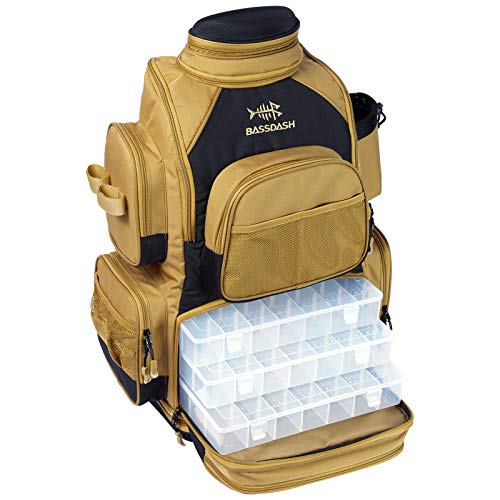 BASSDASH Fishing Tackle Backpack Water Resistant Tactical Bag Soft Tackle Box with Rod Holder and Protective Rain CoverCheck Amazon offer
 Documented specifications for BASSDASH 3670 Tackle Backpack
| Model | Capacity | Trays | Rod holders | Water protection | Offer |
|---|---|---|---|---|---|
| BASSDASH 3670 Tackle Backpack | Not confirmed | 3670 · 4 trays | Not confirmed | Water-resistant pack with waterproof molded base and rain cover; no whole-pack submersion standard verified. | Read model guide |
- Documented pack weight
- Not confirmed
- External dimensions
- 23.6 × 18.1 × 11.8 in
- Rain cover
- Documented
Three 3670 trays in lower compartment plus one in molded base; with-tray and without-tray variants.
3670 tray dimensions: 12.4 x 8.9 x 2 inches; do not equate with standard 3700.
Dimensions normalized from 18.1 L x 11.8 W x 23.6 H inches; footprint L becomes wearable width.
What the four-tray configuration means
BASSDASH specifies three 3670 trays in the lower compartment and one additional 3670 tray in the molded base. Each is listed at 12.4 by 8.9 by 2 inches. Versions with four trays and without trays are offered. The 600D polyester bag measures about 23.6 inches high with an 18.1-by-11.8-inch footprint. Its features include a removable compartment divider, rain cover, sunglasses storage, rod attachment pockets, and chest and waist straps. The base is described as waterproof; that claim does not establish waterproof protection for every pocket or the whole pack.
Decide what belongs in the base
A separate bottom box can create a useful category, but it should hold equipment you can retrieve comfortably at a planned stop. Consider whether you want backup terminal tackle, an alternate lure selection, or infrequently used supplies there. Do not put an urgently needed item in a place that requires a complicated unpacking sequence. Before heading out, set the loaded bag on level ground and remove that box without disturbing the rest of the gear. Then return it and close everything. A useful storage feature should work with the bag fully packed, not only while it is empty on a table.
Keep the bottom compartment's purpose consistent between trips. A predictable location for reserve equipment is easier to use than a hidden catch-all that must be searched whenever the rest of the pack looks full.
Measure the actual boxes you own
The distinctive 3670 dimensions make this a poor place to assume universal compatibility. Measure any replacement tray including its latch and hinges. Depth matters just as much as the other dimensions when several boxes are stacked. If your existing tackle is organized in a different standard, assess the cost and effort of moving it before choosing a bag-only version. A new box layout may force lure compartments to change, so check the interior arrangement too. For large hard baits, the useful measurement is whether each lure can lie safely without tangled hooks, rather than how many dividers a box contains.
The large footprint needs a real fit check
This is a model to try with a representative full-day load. Include water, food, rain gear, and the dense terminal tackle that is easily overlooked in a showroom comparison. Check how low the bag sits, how far the sides project, and whether you can bend freely. If your fishing involves narrow trails or frequent movement through brush, evaluate the exterior attachments with particular care. Keep rods and tools stable rather than allowing them to swing. The extra storage only earns its place if you can comfortably bring it to the destinations you actually fish.
Choose it for a planned larger kit
The 3670 earns consideration if its 12.4-by-8.9-by-2-inch trays suit your lures and the separate base box gives reserve tackle an accessible home. It is less persuasive when the main attraction is simply a larger number on the product page. Use the rain cover early in poor weather, give electronics independent sealed protection, and empty damp compartments after use. Drying a cover while leaving wet tackle sealed inside does not complete the job. Compare this model with a smaller three-tray pack using the same essential list. If the smaller option carries everything important, the remaining question is whether the extra reserve gear is worth carrying.
Questions about BASSDASH 3670 Backpack: Size and Box-Fit Guide
Are 3670 and 3700 trays the same?
Do not assume so. BASSDASH lists its 3670 tray at 12.4 by 8.9 by 2 inches; compare exact external dimensions.
Where does the fourth box go?
The manufacturer specifies an additional box in the molded base, beneath the three-box lower compartment.
Is the bag sold without trays?
Yes. Both bag-only and four-tray configurations appear on the official product page.