models
YETI Panga 28L: Waterproof Fishing Backpack Guide
The YETI Panga 28L provides protected central storage rather than a built-in tackle-tray layout. It can carry clothing and fishing gear, but you supply the internal organization and any optional external cases. Its 3.9-pound empty weight belongs in the comparison, and its waterproof construction does not provide cooler insulation.
As an Amazon Associate I earn from qualifying purchases. About affiliate links.
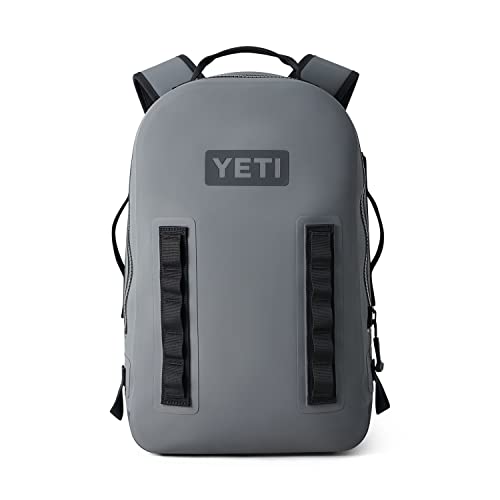 YETI Panga 28 Airtight Waterproof Submersible BackpackCheck Amazon offer
  fishpond Thunderhead Waterproof Backpack – Fully Submersible Zipper, Accessory Attachments, 28L | Fishing Backpack - Eco YuccaCheck Amazon offer
 Documented specifications for YETI Panga 28L Waterproof Backpack
| Model | Capacity | Trays | Rod holders | Water protection | Offer |
|---|---|---|---|---|---|
| YETI Panga 28L Waterproof Backpack | 28 L | Not confirmed | Not confirmed | Manufacturer states tested to IPX7: one meter of immersion for 30 minutes when properly zipped; HydroLok zipper with U-Dock creates the seal. | Check Amazon offer |
- Documented pack weight
- 3.9 lb
- External dimensions
- 19.7 × 12.5 × 7 in
- Rain cover
- Not confirmed
Panga is an uninsulated dry backpack, not a cooler.
SideKick Dry gear case and bottle slings are optional accessories.
No tackle-tray capacity or dedicated rod-holder count specified.
IPX7 is reported as a manufacturer test claim; no independent testing was performed for this guide.
Confirmed construction and limits
YETI specifies 28 liters, an empty weight of 3.9 pounds, and dimensions of 19.7 inches high by 12.5 wide by 7 deep. The pack uses a laminated nylon ThickSkin shell, a HydroLok zipper, and a U-Dock closure, with waterproof and airtight protection described for deep water. Internal organization includes a sleeve and mesh pocket. SideKick Dry cases and bottle slings are separate accessories. The Panga is uninsulated and is not a cooler. YETI states that it tested the closed pack to IPX7, described as one meter of immersion for 30 minutes. No tackle-tray capacity or dedicated rod-holder count is specified.
Build an internal fishing kit intentionally
Because this is a protected central space rather than a preassigned tray cabinet, choose the containers around your own gear. Measure the boxes you want to bring and test the loaded arrangement without forcing hard corners against the shell. A small number of distinct pouches can separate spare clothing, food, and tackle. Keep sharp tools protected and place dense items close to the body where practical. Decide which belongings need frequent access before burying them underneath reserve equipment. If you need a lure every few minutes, a separate working selection may make more sense than opening the main compartment for each change.
Use the same internal organizers during the fit check that you will carry on the trip. Empty pouches can collapse around a load, while packed hard cases may change both access and pressure against your back.
Account for empty weight and accessories
The bag's listed empty weight belongs in any realistic comparison. Add water, tackle, and the accessories you plan to attach before evaluating comfort. Do not compare a bare Panga against a different pack carrying boxes, bottle holders, and tools. Optional external storage can improve access, but it also adds bulk and changes balance. Start with the simplest configuration that meets the trip's needs, then add an accessory only when it solves a repeated problem. Try walking, bending, and raising your arms with the full arrangement. The useful system is the one you can carry comfortably and access predictably.
Follow the actual closure and care routine
YETI directs users to slide the zipper fully into the U-Dock and check for air leakage by applying pressure. Its care guidance calls for cleaning, freshwater rinsing, thorough drying, and zipper lubricant, with dry storage in the closed position. Follow those product-specific instructions rather than transferring habits from a roll-top bag or another zipper system. Keep the sealing area clear of grit and trapped belongings. If you notice a leak or unexpected resistance, resolve it before loading important equipment. A dry backpack's value depends on maintaining the complete barrier, including the place where the closure finishes.
Who should choose Panga for fishing
The Panga provides the dry enclosure; the tackle boxes and pouches you choose must supply the fishing organization. It can be especially useful to someone whose dry-storage requirements extend beyond tackle, but the lack of a prescribed tray layout means you must plan your own. For a conventional bank-fishing kit centered on several boxes and tool pockets, compare the access behavior carefully. Do not choose it to keep drinks cold; that is a different function requiring insulation. After each trip, separate wet contents promptly and confirm the pack is dry before storage, even if no outside water entered during use.
Questions about YETI Panga 28L: Waterproof Fishing Backpack Guide
Is Panga 28 a cooler?
No. YETI explicitly states that the Panga backpack has no insulating properties.
How much does the current Panga 28 weigh?
The verified U.S. product page lists an empty weight of 3.9 pounds.
Are the external gear case and bottle sling included?
They are compatible optional accessories. Do not assume they come with the backpack unless a particular bundle explicitly includes them.