accessories
Fishing Backpack Rain Covers: Size and Coverage Checks
Buy a rain cover for the shape of your loaded fishing backpack, not just its advertised capacity. Rod holders, stuffed side pockets and an attached stool can change the outside dimensions considerably. A cover is useful when it stays secured and shields the pack’s exposed surfaces without needing constant adjustment whenever you move or retrieve equipment.
As an Amazon Associate I earn from qualifying purchases. About affiliate links.
These are external rain covers, not complete backpacks or submersible liners. The Osprey catalog title does not establish the selected size; verify its size range. Check loaded-pack dimensions, straps and projecting rods before choosing either cover.
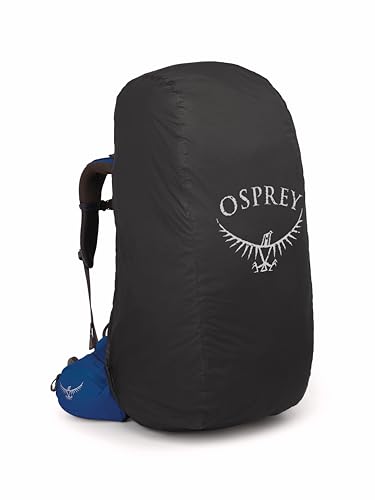 Osprey Ultralight Raincover for Backpack, BlackCheck Amazon offer
  Sea to Summit Ultra-SIL Waterproof Backpack Cover, Small, Royal BlueCheck Amazon offer
 Use capacity ranges as a first filter
Osprey lists its medium Ultralight Raincover for 30–50L packs and its large version for 50–75L packs. Those ranges are useful starting points, but a fishing backpack’s rigid tray compartment and external gear can produce a different shape from a hiking pack with the same stated capacity.
Fit the cover with the normal tackle load in place. Fill the side pockets you actually use and attach the equipment you normally carry. The edge should reach around the intended perimeter without stretching the fabric tightly across sharp corners. Excess material should be controlled rather than left to flap or catch vegetation.
Check how the cover stays attached
Look at the perimeter adjustment, any retaining strap and how the cover sits near the harness. Osprey’s large cover page specifies a drawcord and taped seams. The practical question is whether that arrangement stays positioned on your particular bag while allowing the shoulder straps and back panel to work normally.
Do not attach a retention cord where it will obstruct a buckle you need to release. If a cover lacks a suitable retaining method for an unusually shaped pack, a different size or design may be more useful than stretching it harder. Examine the fit again after removing a bulky item, because the bag’s shape can change.
Plan around rods and sharp equipment
External rods and net frames can interrupt the surface a cover needs to protect. Decide whether those items remain outside, move under the cover or travel separately in wet weather. Each arrangement has consequences for access and fit, so practice it before rain makes the task awkward.
Cover hook points and keep sharp tools away from thin cover fabric. Avoid cutting unplanned holes for rod holders; that creates an opening where runoff can enter and may weaken the edge. A cover that cannot accommodate your essential attachments is a compatibility problem, not a reason to force the fabric over them.
Understand the exposed side of the system
Sea to Summit’s manufacturer guidance explains why coated backpack fabric does not necessarily seal sewn seams and ordinary zippers. An external cover reduces direct rain exposure, but its open harness side remains different from a sealed enclosure. Water exposure at the back panel and a submerged bag require separate consideration.
Put critical dry items inside suitable internal protection. This can be one liner for spare clothing and a separately rated pouch for electronics. The cover then has a clear role: shielding the outside of the pack from rain and reducing how much wet fabric you carry after the weather passes.
Make storage and drying easy
Store the cover in an accessible pocket, with its retaining edge ready to unfold, so you can fit it before opening the main pack in rain. Afterward, spread it out and inspect the seams and places that rubbed against tray corners or external attachments. Repack it only when dry, and return it to the same pocket for the next outing.
Questions about Fishing Backpack Rain Covers: Size and Coverage Checks
Will a rain cover make my backpack submersible?
No. An external cover is not a sealed dry enclosure. Use protection designed for the expected water exposure.
Should I automatically buy the next size up?
No. Check the loaded fit. Extra material can flap, collect water or catch vegetation, while an undersized cover leaves gaps.